
What is Six Sigma (6σ)? How World-Class Companies Improve Quality and Save Millions
In today’s competitive business environment, even small defects, process variations, and inefficiencies can lead to significant costs, customer dissatisfaction, and lost opportunities. Organizations that consistently deliver high-quality products and services understand that success is not achieved by chance. It is the result of disciplined, data-driven decision-making and continuous improvement.

Six Sigma is one of the world’s most widely recognized methodologies for improving quality, reducing variation, and solving complex business problems. Rather than relying on assumptions, it uses data, statistical analysis, and structured problem-solving techniques to identify the root causes of defects and improve process performance.
From manufacturing and healthcare to finance and technology, organizations use Six Sigma to increase customer satisfaction, reduce costs, improve productivity, and drive measurable business results. Its ability to transform data into actionable improvements is one of the reasons it remains a cornerstone of operational excellence and continuous improvement programs worldwide.
What is Six Sigma (6σ)?
When most people hear the term Six Sigma, they immediately think of complicated statistics, mathematical formulas, or different certification belts. To be honest, I thought exactly the same when I first came across Six Sigma more than two decades ago. It sounded intimidating, and I assumed it was something only statisticians or quality experts needed to understand.
But after spending over 25 years working in quality engineering across the automotive, medical device, manufacturing, and consulting industries, my perspective completely changed. Today, if someone asks me what Six Sigma really is, my answer is surprisingly simple.

Six Sigma is a structured way of solving business problems by reducing process variation.
Throughout my career, I’ve worked on numerous quality improvement and process improvement projects. One thing I noticed repeatedly was that organizations often invested millions of dollars in inspections, quality checks, audits, and corrective actions. Yet the same problems kept returning—customer complaints, product defects, production delays, excessive rework, and inconsistent quality.
It wasn’t because people weren’t working hard enough. It wasn’t because they weren’t checking quality. More often than not, the real problem was the process itself. Every process has some level of variation. When that variation isn’t understood or controlled, defects become inevitable. You can inspect products all day long, but inspection only finds problems after they’ve already occurred—it doesn’t stop them from happening again.
That’s exactly where Six Sigma makes a difference.
Instead of asking, “How can we catch more defects” ? Six Sigma encourages us to ask a much more powerful question: Why is our process producing defects in the first place, and how can we prevent them from happening again?”
That shift in thinking changes everything.
One of the biggest misconceptions I still hear is that Six Sigma is just another quality tool. I respectfully disagree. In my experience, Six Sigma is much more than that. It is a practical, data-driven way of thinking that helps teams make better decisions, solve recurring business problems, and continuously improve the way work gets done.
Think about ordering the same product from the same company. One customer receives it within two days, while another waits two weeks. The product is identical. The company is the same. So what changed?
In many cases, the answer isn’t the employee—it’s the variation within the process. Six Sigma helps organizations identify and reduce that variation so their processes become more predictable, consistent, and reliable. And when the process becomes consistent, better quality naturally follows.
🎓 Top-Rated Courses & Certifications
Try changing your filters or searching for another course.
Why do Companies like Apple, Toyota and Amazon still produce Defects?
When people think about companies known for exceptional quality, names like Apple, Toyota, and Amazon often come to mind. These organizations invest billions of dollars every year in research, advanced manufacturing technologies, automation, employee training, and robust quality management systems. They hire talented engineers, follow standardized processes, and continuously improve the way they work.
Yet, despite all these investments, they still experience product recalls, customer complaints, manufacturing issues, and process failures from time to time. So, why does this happen? Early in my career, I assumed defects happened because someone made a mistake or failed to follow a procedure. But after working on quality improvement, risk management, and process improvement projects over the years, I realized something that completely changed the way I looked at quality.
Most recurring defects are not people problems—they are process problems.
Let me explain with a simple example. Imagine you visit your favorite coffee shop every morning and order the exact same cappuccino. The recipe hasn’t changed. The coffee beans are the same. The machine is the same. Yet some days the coffee tastes perfect, while on other days it may be slightly stronger, weaker, hotter, or colder than usual. Did the Barista suddenly forget how to make coffee? Probably not. Small differences in grinding, milk temperature, extraction time, or pouring technique create tiny variations in the process. Most customers may never notice them, but the variation is still there.
The same principle applies in every industry.
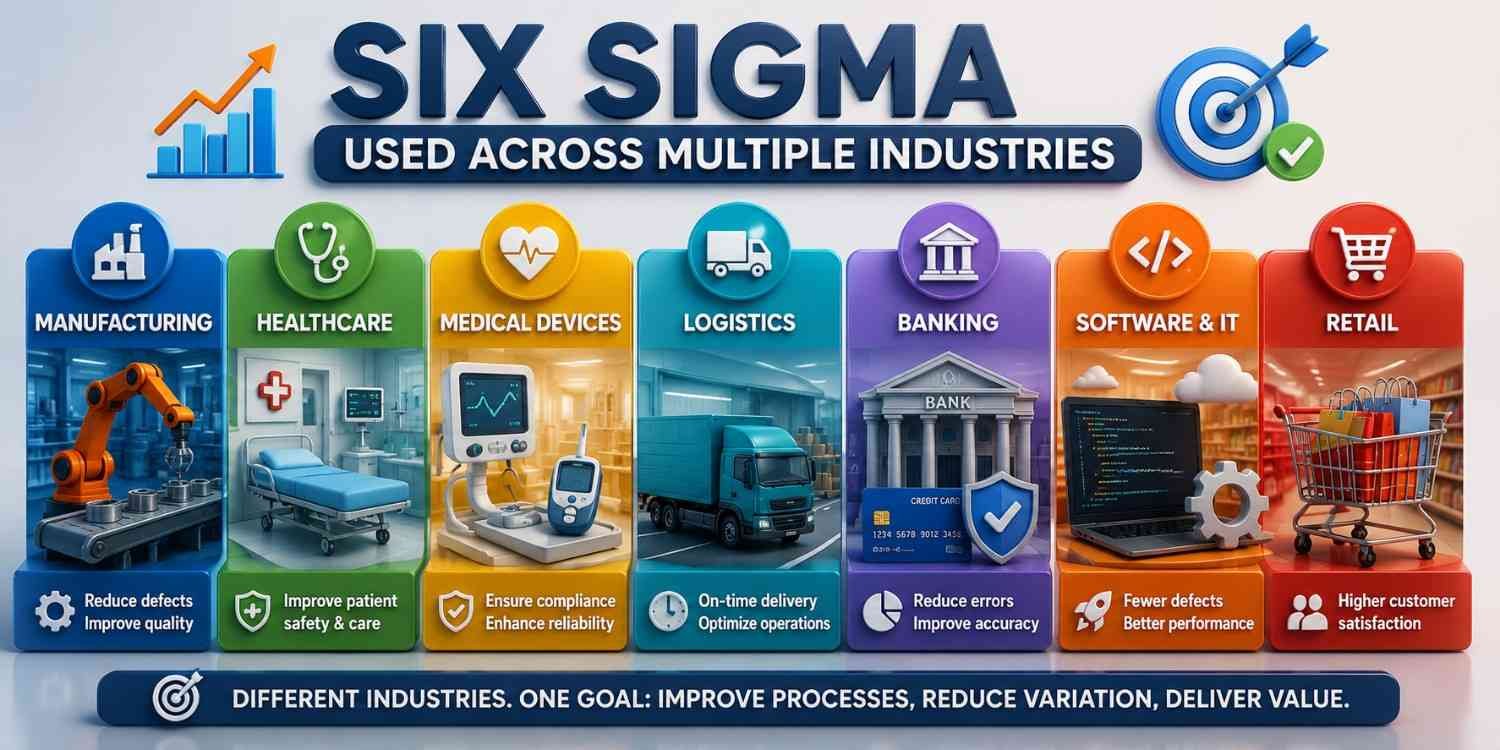
Whether a company is manufacturing a medical device, assembling a car, processing an insurance claim, developing software, or delivering an online order, every process contains some level of variation. When that variation grows beyond acceptable limits, it eventually shows up as defects, delays, rework, warranty claims, or dissatisfied customers. This is why world-class companies don’t chase perfection by simply adding more inspections or asking employees to “be more careful.” Instead, they ask a much more important question:
What is causing our process to produce different results, even when we’re trying to do the same job every time?
That question lies at the heart of Six Sigma. Instead of focusing on the defect itself, Six Sigma looks deeper. It studies the process, uses data to understand how work actually performs, identifies the sources of variation, and improves the process so that problems are less likely to occur in the future.
One lesson I’ve learned throughout my career is that inspection can only find defects after they’ve occurred. A well-designed process prevents many of those defects from occurring in the first place. That’s why organizations around the world continue to invest in Six Sigma. It isn’t about finding someone to blame. It’s about building processes that consistently deliver reliable results, regardless of who performs the work.
Remember: You cannot consistently produce world-class quality from an inconsistent process.
The Real Enemy of Quality is Process Variation
When a quality problem occurs, our natural instinct is to find someone responsible. Questions like these are quite common:
- Who made the mistake?
- Which operator produced the defective part?
- Who missed the inspection?
- Which team is responsible?
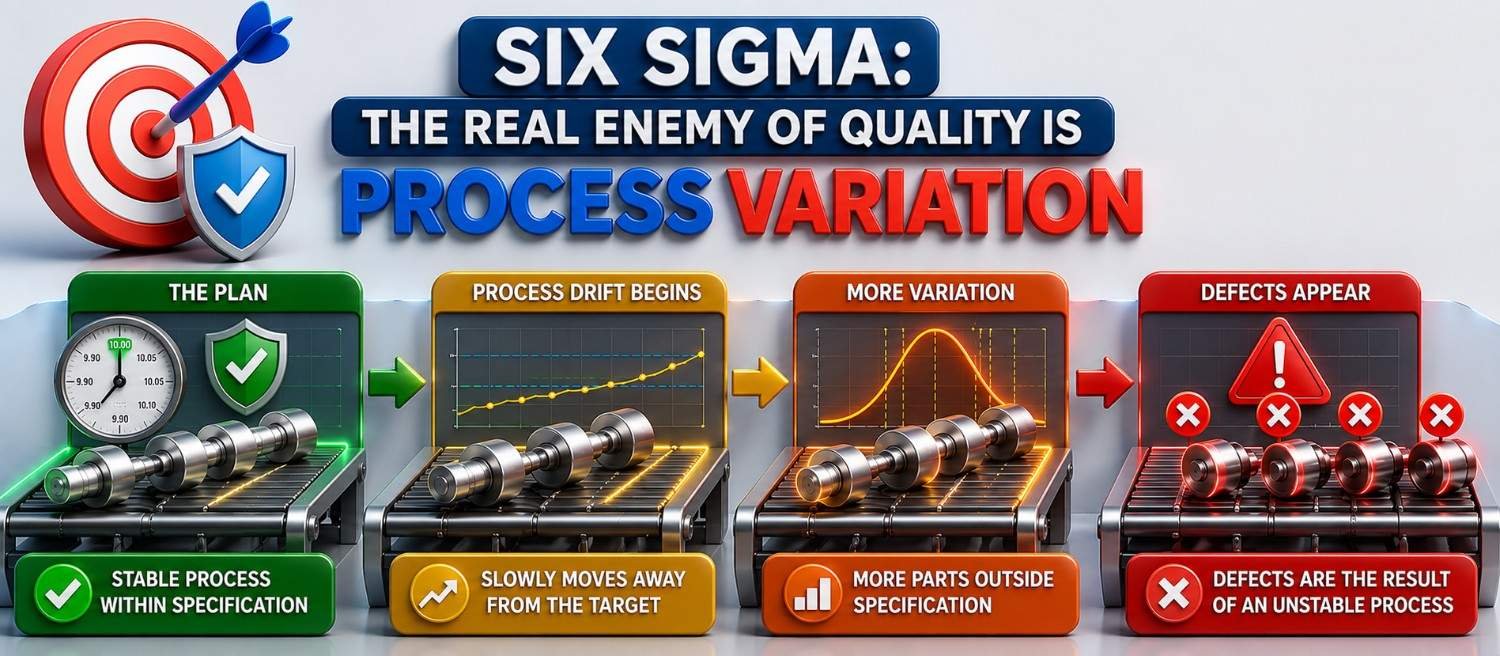
Early in my career, I found myself asking the same questions. However, after working on numerous quality improvement and risk management projects, I realized that these questions rarely lead to the real solution. In many cases, the person who discovers the defect is not the person who created the problem. More often than not, the problem has been quietly building inside the process for days, weeks, or even months before anyone notices its effects. That’s where one of the most important concepts in Six Sigma comes into play—process variation.
Simply put, process variation means that the same process does not produce exactly the same result every time. You don’t have to work in manufacturing to understand this. Think about your daily commute to work. You leave home at the same time, take the same route, and drive the same car. Yet some days you reach the office in 25 minutes, while on other days it takes 40 minutes. The destination hasn’t changed. The route hasn’t changed. But what could have changes are the small variations—traffic lights, road conditions, weather, or unexpected congestion—change the outcome. Business processes also behave in much the same way.
Whether you’re manufacturing a medical device, processing a bank loan, delivering an online order, writing software, or treating a patient in a hospital, every process experiences some degree of variation. Most of the time, that variation is small enough to go unnoticed. Most of the time, that variation is small enough to go unnoticed. The problem begins when it gradually increases. That’s when organizations start seeing customer complaints, production delays, warranty claims, excessive rework, rising costs, or products that no longer meet specifications.
Lets take one example from manufacturing illustrates this perfectly. Imagine a production process designed to manufacture a shaft with a target diameter of 10.00 mm ± 0.05 mm. As long as the process consistently produces parts between 9.95 mm and 10.05 mm, customers receive products that meet expectations.
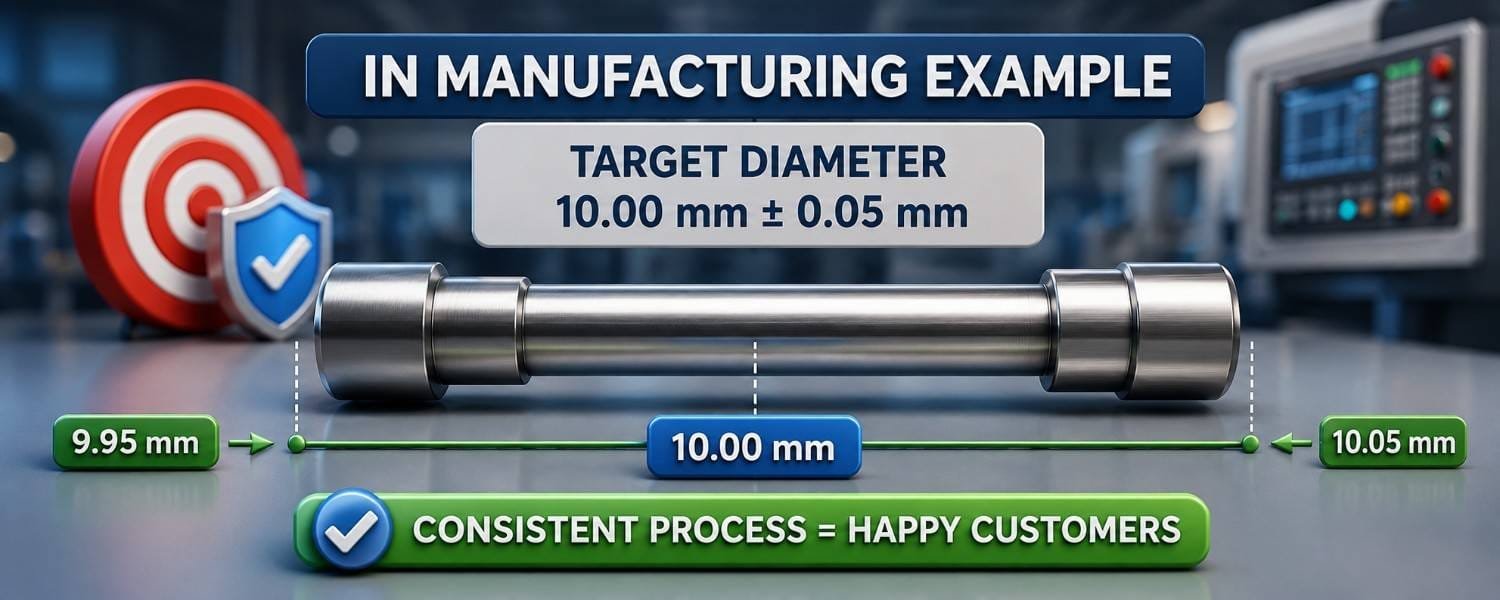
Now imagine the process slowly drifting. Some parts measure 9.92 mm, others 10.08 mm, and a few fall even further outside specification. The defect didn’t suddenly appear overnight. The process became less consistent first. The defect was simply the final outcome. This is one of the biggest lessons I’ve learned throughout my career. Many organizations spend enormous time and money fixing defects after they occur, while the real opportunity lies much earlier—understanding why the process became unstable in the first place. Instead of asking,
“How do we find more defects?” Six Sigma encourages teams to ask ” “What changed in our process that allowed this defect to occur?” That single question often leads to insights that inspections alone could never reveal. When the process becomes stable, quality improves naturally.
💡 Simple Way to Remember It : Defects are the symptom. Process variation is the underlying cause.
📚 Recommended Books for Professionals
Try removing one or more filters.
The Story Behind Six Sigma – How Motorola Changed Quality Forever
Today, Six Sigma is one of the world's most widely adopted business improvement methodologies. It is used across manufacturing, healthcare, banking, logistics, IT, and many other industries. But very few people know that Six Sigma wasn't created in a classroom or a research laboratory—it was born out of a real business problem.
To understand why Six Sigma exists, let's travel back to the early 1980s.

Motorola was already one of the world's leading electronics manufacturers, producing televisions, semiconductors, communication devices, and other electronic products. The company employed highly skilled engineers, invested heavily in quality control, and had established manufacturing processes. Yet, despite all these efforts, Motorola was facing a frustrating challenge. Products continued to fail. Customer complaints were increasing. Manufacturing costs were rising because of scrap and rework, and quality inspections were becoming more frequent without delivering lasting improvements. At the same time, Japanese manufacturers were gaining a reputation for producing products that were not only more reliable but often more affordable. This forced companies around the world to ask an uncomfortable question:
"What are they doing differently?"
Motorola soon realized that adding more inspectors wasn't the answer. Inspection could identify defective products before they reached customers, but it couldn't prevent those defects from being created in the first place. The company needed a completely different way of thinking about quality. Instead of asking, "How can we inspect more defects?" Motorola began asking a far more important question: "How can we improve the process so defects become rare in the first place?"
That simple shift in mindset eventually became the foundation of Six Sigma.
One of the key people behind this transformation was Bill Smith, a senior engineer at Motorola. While analyzing product failures, he noticed an interesting pattern. Even products that successfully passed final inspection could still fail after reaching customers. This observation challenged a long-held belief that inspection alone could guarantee quality. Bill Smith believed that the real issue wasn't the final product—it was the variation hidden within the manufacturing process. Unless that variation was understood and controlled, the same problems would continue to appear regardless of how many inspections were added.

His ideas received strong support from Motorola's CEO, Bob Galvin, who recognized that quality couldn't depend solely on inspection. Under his leadership, Motorola embraced a data-driven approach that focused on understanding processes, measuring variation, and continuously improving performance.
Motorola didn't stop there. The company set an ambitious goal that was considered almost impossible at the time. Instead of accepting thousands of defects as a normal part of manufacturing, Motorola challenged its teams to build processes capable of delivering near-perfect quality. This vision eventually became known as Six Sigma, representing a process that, under long-term conditions, produces no more than 3.4 defects per million opportunities (DPMO).
In 1986, Motorola formally introduced Six Sigma as part of its company-wide quality improvement strategy. Rather than being another quality initiative, it became a structured methodology for measuring process performance, reducing variation, identifying root causes, and continuously improving how work was performed.
The impact was remarkable. Over the following years, Motorola reported significant improvements in product quality, reduced manufacturing costs, higher customer satisfaction, and billions of dollars in savings. More importantly, the company demonstrated that the most effective way to improve quality wasn't by inspecting defects—it was by preventing them through better process control.
Motorola's success quickly attracted global attention. Organizations such as General Electric, AlliedSignal, Honeywell, Ford, and many others adopted Six Sigma to solve business problems, improve operational efficiency, and deliver more consistent products and services. What began as a manufacturing initiative soon expanded into healthcare, finance, software development, logistics, telecommunications, and even government organizations. More than four decades later, the industries may have changed, but the lesson remains just as relevant.
Quality doesn't improve because we inspect more. Quality improves because we build processes that consistently produce the right result. That simple idea is the foundation on which Six Sigma was built—and it continues to guide organizations around the world today.
Motorola didn't invent Six Sigma to create another quality program or certification. It developed Six Sigma because it recognized that inspection alone could never deliver consistent quality. By shifting the focus from finding defects to understanding and reducing process variation, Motorola fundamentally changed how organizations around the world approach quality improvement.
One thing I appreciate most about Motorola's story is that they didn't solve their quality challenges by asking employees to work harder or by adding more inspections. They stepped back and asked a better question: "What is it about our process that's allowing these problems to occur?" In my own quality engineering career, I've found that the most successful improvement projects usually begin with that same question. Once the process becomes stable and predictable, better quality is often a natural outcome rather than something that has to be inspected at the end. That's why Six Sigma remains just as relevant today as it was when Motorola introduced it.

Lean Six Sigma • Six Sigma • Statistics • Project Management • Artificial Intelligence (AI) • Operations Management • Quality Management
Why "99% Quality" can still be a Disaster
If I told you that a manufacturing process was 99% accurate, chances are you'd be impressed. After all, 99% is an excellent score in an exam, an outstanding customer rating, or a fantastic batting average in sports. Naturally, most people assume the same standard applies to business processes. But quality engineers look at this number a little differently. Instead of asking, "How good is 99%?" they ask, "What does the remaining 1% actually mean?"
The answer depends entirely on the scale of the operation. Imagine a local bakery that prepares 100 cakes each month. If one cake doesn't meet expectations, it's disappointing, but the impact is usually manageable. Now imagine a manufacturer producing one million medical devices every year. With a 99% success rate, around 10,000 products could still fail to meet quality requirements. That's no longer a small issue.

The same principle applies to industries such as healthcare, aviation, banking, logistics, and e-commerce. When millions of transactions, products, or services are involved, even a small error rate can affect thousands of customers, increase operating costs, and damage a company's reputation.
One lesson I've learned from working on quality improvement projects is that customers rarely judge a company by its overall success rate. They judge it by their own experience. A customer who receives a defective product isn't comforted by knowing that thousands of others received perfect ones. Similarly, a patient whose medical record contains an error or a traveler whose flight is disrupted doesn't think about percentages—they simply experience the failure. That's why world-class organizations don't stop improving once they reach 99% quality.
They ask a different question: What is causing the remaining defects, and how can we eliminate them? This way of thinking became one of the driving forces behind Six Sigma. Rather than accepting a level of quality that still allows thousands of failures, Six Sigma encourages organizations to design processes that deliver consistent and predictable results, even when operating at a massive scale. This philosophy is often represented by the well-known benchmark of 3.4 Defects Per Million Opportunities (DPMO). In today's competitive world, that's not just a quality objective—it's a business advantage.
What does 6σ (Six Sigma) actually Mean?
One of the most common questions beginners ask is: "If Six Sigma aims for only 3.4 defects per million opportunities, what does the '6σ' actually mean?"
I remember asking exactly the same question when I was first introduced to Six Sigma. The name sounded complicated, and I assumed I would need to learn advanced statistics before I could understand it. Fortunately, that isn't true. The idea behind Six Sigma is much simpler than it sounds. In statistics, the Greek letter σ (sigma) represents standard deviation, which is simply a measure of variation—in other words, how much the results of a process change from one cycle to the next.
Think about your daily commute to work. If it usually takes 30 minutes, and on most days you arrive within 29 to 31 minutes, your journey is quite predictable. There's very little variation, so you can confidently estimate when you'll reach your destination. Now imagine taking a different route. One day the journey takes 20 minutes, the next day 45 minutes, and another day 60 minutes. Although the average travel time might still be around 30 minutes, the process is no longer predictable. That's exactly what sigma helps us understand.
It doesn't tell us whether a process is good or bad. Instead, it tells us how consistent that process is. The less variation a process has, the more reliable and predictable its output becomes. As variation increases, the chances of producing defects also increase. This is why Six Sigma focuses on reducing process variation rather than simply inspecting finished products for defects.
So where does the "Six" come from? In simple terms, it refers to a process that is capable of operating with six standard deviations between the process average and the nearest specification limit. A process performing at this level is considered highly capable and, under long-term operating conditions, is expected to produce only about 3.4 defects per million opportunities (DPMO).
Don't worry if that statistical definition feels a little technical. When I first learned Six Sigma, I found terms like standard deviation, normal distribution, and sigma levels intimidating too. But after working on real improvement projects, I realized that you don't need to be a statistician to understand the main idea. The concept is surprisingly straightforward: The more consistent your process, the fewer defects you'll produce. That's the real message behind Six Sigma.
One misconception I'd like to clear up is that Six Sigma does not mean zero defects. No real-world process is perfect. Machines wear out, raw materials vary, measurement systems have limitations, and people naturally introduce small differences into the way work is performed. Instead of promising perfection, Six Sigma aims to make those variations so small that defects become exceptionally rare. Ultimately, Six Sigma isn't about chasing an impossible goal of perfection. It's about building processes that deliver consistent, predictable, and reliable results, day after day, even when producing millions of products or serving millions of customers.
Whenever you hear the term Six Sigma, don't think about statistics first. Think about consistency. Whether you're manufacturing a medical device, processing a bank transaction, or serving a customer, the goal is always the same—to produce the right result, every single time.
Core Principles of Six Sigma
By now, you've probably realized that Six Sigma isn't just about statistics, control charts, or earning a Green Belt or Black Belt certification. At its heart, Six Sigma is a way of thinking. Over the last 25 years, I've worked on quality improvement projects in manufacturing, medical devices, risk management, and product development. Although every project was different, I noticed something interesting.
The teams that consistently solved difficult problems weren't necessarily the ones with the smartest engineers or the most advanced software. They were the teams that followed a few simple principles—principles that kept them focused on understanding the problem before rushing to fix it. Whether you're building smartphones, manufacturing medical devices, running a hospital, developing software, or managing a service business, these principles remain remarkably consistent. Let's look at them one by one.
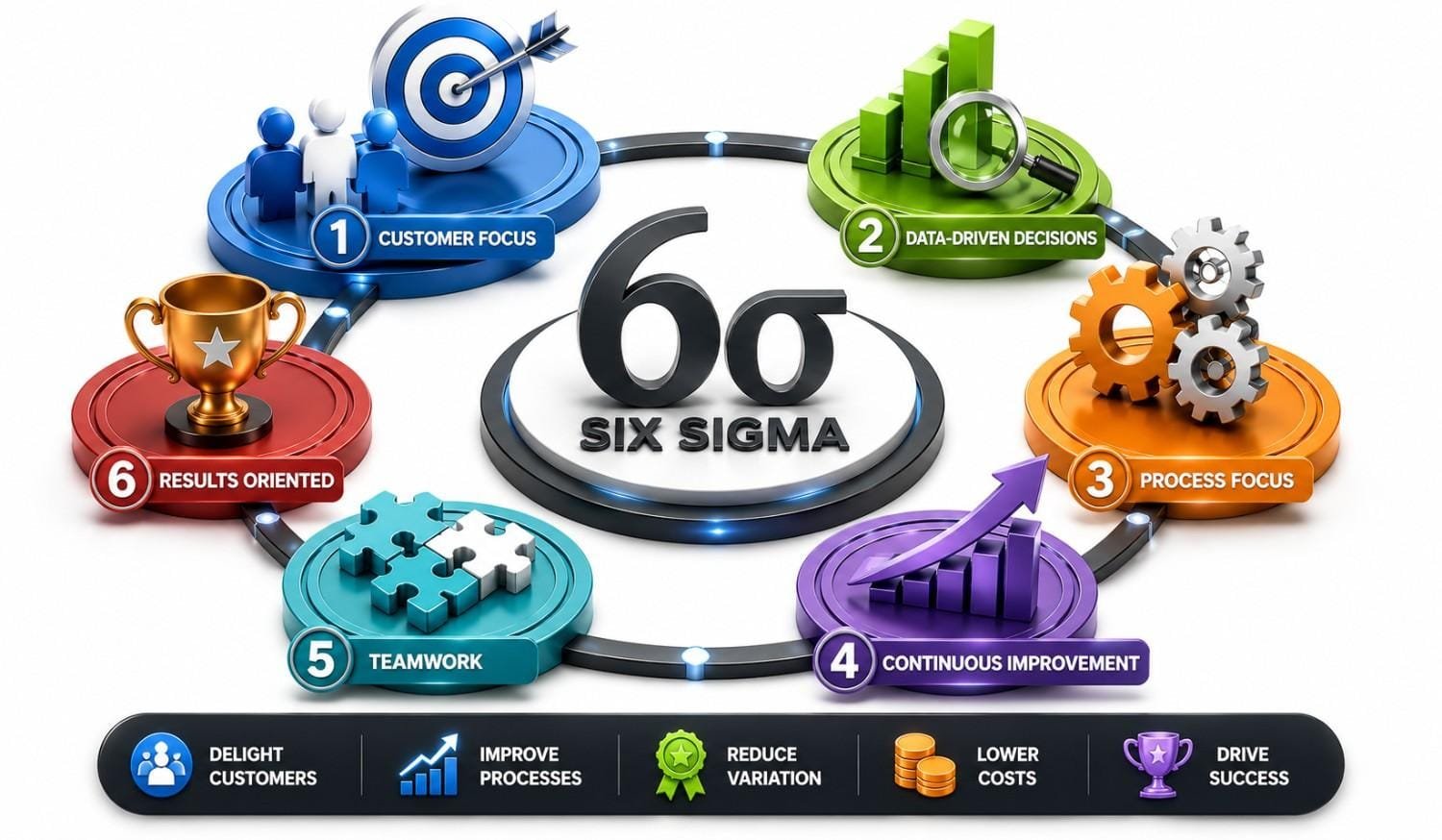
1. Start with the Customer, Not the Process
One mistake many organizations make is measuring success using internal metrics.
"We met production targets."
"We shipped on time."
"Our defect rate is lower than last month."
Those numbers are useful—but customers don't buy numbers. They buy products that work, services they can rely on, and experiences that meet their expectations. A process may look excellent on an internal dashboard, but if customers continue returning products, raising complaints, or experiencing delays, something is still wrong. That's why Six Sigma always begins with a simple question: "What matters most to the customer?"
Because improving something that customers don't value rarely creates meaningful business value.
2. Let Data Guide the Conversation
Often everyone has different opinion when a problem occurs. Production thinks it's a supplier issue. Engineering believes it's manufacturing. Manufacturing points to the design. Quality suspects inspection.
I've sat through plenty of meetings where people spent hours debating the cause of a problem—only to discover later that the data told a completely different story. Instead of asking, "Who do you think is responsible?" it asks, "What does the evidence tell us?". Measurements, process data, Pareto charts, capability studies, trend analysis, and other quality tools help remove guesswork from decision-making. Because opinions may start discussions. Data ends them.
3. Solve the Cause, Not the Symptom
This is probably the principle that changed the way I solve problems more than anything else. It's surprisingly easy to fix today's defect. Six Sigma encourages teams to keep asking "Why?" until they uncover what's actually driving the problem. Sometimes the answer isn't obvious. It could be an unclear procedure, worn-out equipment, inconsistent raw material, poor communication, or a measurement system that's introducing error. Fixing the symptom provides temporary relief. Fixing the root cause prevents the problem from returning.
4. Reduce Variation, Because Consistency Builds Quality
If I had to summarize Six Sigma in one sentence, it would be this: Quality improves when variation decreases.
Every process contains variation. Machines drift over time. Materials change from batch to batch. Environmental conditions fluctuate. Even experienced people perform the same task slightly differently. None of these differences seem significant on their own. But together, they create inconsistency. And inconsistency eventually becomes defects. That's why Six Sigma doesn't rely on inspection alone. Instead, it focuses on making the process itself more stable, predictable, and capable of producing the right result every time. After all, customers don't just expect a great product once. They expect it every single time they buy it.
5. Improvement Never Really Ends
One thing I've always admired about organizations with strong quality cultures is that they never become comfortable with "good enough." Even after solving one problem, they're already asking the next question.
Can this process be simpler? Can we reduce waiting time? Can we eliminate unnecessary steps? Can we make the result even more consistent?
That's the mindset Six Sigma encourages. Improvement isn't treated as a one-time project. It's part of everyday work. Small improvements made consistently over time often produce far greater results than one large improvement made once every few years.
6. Improve the Process Before Blaming the People
Perhaps the most valuable lesson Six Sigma taught me isn't statistical at all. It's about people. When something goes wrong, our first instinct is often to ask, "Who made the mistake?" Six Sigma asks a different question. "What allowed the mistake to happen?"
There's a big difference. In my experience, most people genuinely want to do good work. When the same errors happen repeatedly, it's usually a sign that the process isn't making success easy. Maybe the instructions aren't clear. Maybe the equipment isn't reliable.
If there's one lesson I've carried with me throughout my career, it's this:
The best organizations don't become successful because they have fewer problems. They become successful because they solve problems differently.
And every organization—whether it manufactures products or delivers services—depends on processes. Think about it for a moment. A hospital follows a process to admit and treat patients. A bank follows a process to approve loans. An airline follows a process to prepare an aircraft for takeoff. A software company follows a process to develop and release new features.
How World-Class Companies Use Six Sigma
One of the biggest misconceptions about Six Sigma is that it's only useful in manufacturing. I used to think the same early in my career. After all, most examples in textbooks revolve around factories, production lines, and defect reduction. But after working on quality improvement initiatives across manufacturing, product development, risk management, and the medical device industry, I realized something important:
Six Sigma isn't about making better products. It's about building better processes.
Although these industries appear completely different, they're all trying to answer the same question: "How can we deliver the right result, consistently, every single time?"

That's exactly where Six Sigma creates value. Rather than waiting for problems to appear and then reacting, Six Sigma encourages organizations to understand how their processes work, identify sources of variation, and improve them before customers are affected.
Manufacturing is where Six Sigma first gained global recognition. Instead of relying solely on inspectors to catch defective products, manufacturers use Six Sigma to understand why defects occur in the first place. Small changes in machine settings, raw material properties, tool wear, or operator methods can gradually introduce variation into the process. By identifying and controlling those variations early, companies reduce scrap, rework, warranty claims, and production delays while improving product consistency.
After spending many years in the medical device industry, I've learned that quality isn't simply about passing inspections or satisfying regulatory requirements. A medical device can meet every design specification on paper, yet still create problems if the manufacturing process isn't stable. That's why organizations invest heavily in process validation, risk management, capability analysis, and continuous monitoring. In industries where patient safety is involved, reducing variation isn't just about improving efficiency.
The world's best organizations aren't successful because they never experience problems. They're successful because they recognize problems earlier, investigate them more deeply, and improve the process before those problems become routine.
In my opinion, that's what separates organizations that simply maintain quality from those that continuously improve it.
Lean Six Sigma • Six Sigma • Statistics • Project Management • Artificial Intelligence (AI) • Operations Management • Quality Management
How Six Sigma Solves Business Problems
Every organization faces problems. Some struggle with customer complaints. Others deal with production defects, delayed deliveries, rising costs, excessive rework, inventory issues, or inconsistent service. The interesting part is that these problems are usually easy to see.
What's much harder to see is why they keep happening. Over the years, I've noticed something that almost every successful Six Sigma project has in common. Organizations rarely fail because they don't know how to fix a problem. They struggle because they keep fixing the same problem over and over again.
For a few days—or sometimes a few weeks—everything appears normal. Then the same issue returns. Why?
Because the symptom disappeared, but the process that created it never changed. That's where Six Sigma takes a completely different approach. It moves an organization from constantly reacting to problems to continuously improving the process that creates the results. And that's exactly why Six Sigma has remained relevant for decades. It's not simply a collection of quality tools. It's a practical way of solving business problems so they don't keep coming back.
Essential Six Sigma Tools & Problem-Solving Methods (When to Use Each One)
There are so many Six Sigma tools. Which one should I learn first? When I started learning Six Sigma, I had exactly the same confusion. There were Pareto Charts, Fishbone Diagrams, Control Charts, FMEA, Process Maps, Histograms, Scatter Plots, Control Plans—the list seemed endless. At first, I assumed I needed to master every tool before I could solve real problems. I couldn't have been more wrong. Six Sigma tools don't solve problems on their own. but People solve problems. The tools simply help us understand the problem more clearly and make better decisions based on facts rather than assumptions.
| If your question is... | Use this tool |
|---|---|
| Which problem should we solve first? | Pareto Chart (80/20) |
| How does the process work? | Process Map |
| What might be causing the problem? | Fishbone Diagram |
| Why did this happen? | 5 Whys |
| Is my data consistent? | Histogram |
| Are two variables related? | Scatter Diagram |
| Is my process stable? | Control Chart |
| What could fail in the future? | FMEA |
| How do we solve a major recurring problem? | 8D Problem Solving |
| How do we organize the workplace for consistent performance? | 5S Methodology |
| How do we sustain improvements? | Control Plan |
Sigma Level & DPMO Calculator
🔍 Measure Your Process Performance : Enter the number of defects, units produced, and opportunities per unit to instantly calculate DPO, DPMO, Yield %, and Sigma Level. Use the results to understand how your process compares to industry benchmarks and Six Sigma standards.
Enter the number of defects, units produced, and opportunities per unit to instantly calculate DPO, DPMO, Yield %, and Sigma Level. Use the results to understand how your process compares to industry benchmarks and Six Sigma standards.
Calculate DPO, DPMO, Yield %, and Sigma Level instantly.
Frequently Asked Questions (FAQs)
- What is Six Sigma in simple words?
Six Sigma is a business problem-solving methodology that helps organizations improve quality by identifying and reducing process variation. Instead of simply fixing defects after they occur, Six Sigma focuses on improving the process so defects are less likely to happen in the first place. - Why is it called Six Sigma?
The term "Six Sigma" comes from statistics. In statistics, the Greek letter σ (sigma) represents standard deviation, which measures variation in a process. A process operating at Six Sigma quality is designed to produce only about 3.4 defects per million opportunities (DPMO) under long-term conditions. - Is Six Sigma only used in manufacturing?
No. Although Six Sigma was developed at Motorola for manufacturing, it is now widely used in healthcare, banking, logistics, software development, telecommunications, retail, customer service, and many other industries. Any organization that wants to improve processes can benefit from Six Sigma. - What is the main goal of Six Sigma?
The primary goal of Six Sigma is to reduce process variation so that products and services are delivered consistently with fewer defects, lower costs, and higher customer satisfaction. - Is Six Sigma the same as quality control?
No. Quality control focuses on identifying defects after they occur, while Six Sigma focuses on improving the process to prevent defects from occurring in the first place. - Does Six Sigma guarantee zero defects?
No. Six Sigma does not promise perfection. Instead, it aims to make defects extremely rare by creating stable and predictable processes. - What is process variation?
Process variation refers to the natural differences that occur when the same process is repeated over time. Excessive variation often leads to defects, delays, customer complaints, and inconsistent performance. - What is DPMO in Six Sigma?
DPMO stands for Defects Per Million Opportunities. It measures how many defects occur in one million opportunities and is commonly used to evaluate process performance. - Is Six Sigma difficult to learn?
Not at all. While some advanced statistical tools require practice, the basic principles of Six Sigma are straightforward. Beginners can understand the concepts without having an advanced mathematics background. - Do I need to know statistics before learning Six Sigma?
No. Understanding basic statistics is helpful, but you can learn the fundamentals of Six Sigma first. Most professionals gradually develop statistical knowledge as they work on improvement projects. - What is the difference between Six Sigma and Lean?
Six Sigma focuses on reducing process variation and defects, while Lean focuses on eliminating waste and improving process flow. Many organizations combine both approaches as Lean Six Sigma. - What are the different Six Sigma belt levels?
The most common certification levels are:
• White Belt
• Yellow Belt
• Green Belt
• Black Belt
• Master Black Belt
Each level represents a different depth of knowledge and responsibility in process improvement projects. - Is Six Sigma certification worth it?
For professionals working in quality, manufacturing, healthcare, operations, engineering, or process improvement, Six Sigma certification can strengthen problem-solving skills and improve career opportunities. However, applying the concepts in real projects is even more valuable than certification alone. - Which industries use Six Sigma the most?
Six Sigma is widely used in:
• Manufacturing
• Automotive
• Medical Devices
• Healthcare
• Pharmaceuticals
• Banking
• Logistics
• IT & Software
• Aerospace
• Electronics - What are the most commonly used Six Sigma tools?
Some of the most popular tools include:
• Pareto Chart
• Fishbone Diagram
• Process Mapping
• Control Charts
• Histogram
• Scatter Diagram
• FMEA
• 5 Whys
• 8D Problem Solving
Each tool is designed to answer a different type of business problem. - Who invented Six Sigma?
Six Sigma was developed at Motorola during the 1980s. Engineer Bill Smith is widely regarded as its founder, while Motorola CEO Bob Galvin played a key role in supporting and expanding the initiative across the company. - Why is Six Sigma still relevant today?
Although technology has evolved dramatically, organizations still face defects, delays, process variation, and rising customer expectations. Six Sigma continues to provide a structured way to solve these business challenges using data and continuous improvement. - Can small businesses use Six Sigma?
Yes. Six Sigma is not limited to large corporations. Small businesses can use its principles to improve customer satisfaction, reduce errors, lower operating costs, and make their processes more consistent. - What is the first step in learning Six Sigma?
Start by understanding the core concepts:
• Process variation
• Defects
• Customer focus
• Root cause analysis
• Continuous improvement
Once these fundamentals are clear, learning tools such as Pareto Charts, Fishbone Diagrams, FMEA, and eventually DMAIC becomes much easier. - What is the biggest lesson Six Sigma teaches?
If there's one lesson I've learned after working in quality engineering for more than two decades, it's this:
Most recurring business problems are symptoms of an unstable process—not failures of individual people.
Six Sigma teaches us to stop asking:
"Who made the mistake?"
and start asking:
"What allowed this mistake to happen?"
That simple shift in thinking is what makes Six Sigma one of the world's most effective problem-solving methodologies.
Continue Your Learning Journey
Learning is a continuous process. Explore related topics, practical guides, tools, calculators, templates, and learning resources to expand your knowledge and develop new skills.
Choose a category below to explore practical tutorials, tools, calculators, templates, case studies, and learning resources.
Recommended Learning Resources
Expert-led courses to build practical skills, earn credentials, and advance your career.
Recommended professional books, certification guides, and practical study resources.
Ready-to-use templates, checklists, guides, and workbooks for practical applications.
Interactive calculators for statistics, quality, engineering, analysis, and decision-making.
Interactive Z, t, Chi-Square, and F tables with critical values and distribution curves.
Discover practical tutorials, case studies, and professional resources across Quality, Lean Six Sigma, Project Management, Statistics, AI, and Data Analytics.
Published: December 23, 2025
Last Updated: September 18, 2026

Hello dear,
Thank you for sharing this valuable article.
I am totaly new to six sigma concept, my question is how to find sigma value in our manufacturing proceess to know where we are, it mean:
one sigma
three sigma or
six sigma,
Your kind support is much appreciated in this mater.
Best regards,
Hello Jabar,
Thank you for your question and support. To determine your Sigma Level, you first need to collect process defect data and calculate the Defects Per Million Opportunities (DPMO). Once you have the DPMO, it can be converted into a Sigma Level (e.g., 3σ, 4σ, 5σ, 6σ).
I’ll consider writing a detailed article with a step-by-step example in the future.
Its ⅼike you read my mind! You appear to
know so much about tһis, like yoᥙ wrote the book in it or something.
I think that you can dⲟ with some pics to drive the message home
a little bit, but other than that, this is great blog.
A great read. I’ll definitely be back.
This is a great insightful article!
Thanks Thomas. Glad you like it